Often, we default to "fine," "stressed," or just a vague sense of "blah." This is why I recommend the How We Feel app to many clients. It’s a rare tool that actually feels like an extension of the work we do in therapy.
Why This App Is Different
Most mood trackers are just digital calendars with smiley faces. How We Feel was built by scientists and therapists (including the team at the Yale Center for Emotional Intelligence), and it shows. Here is why it’s a game-changer for your growth:
1. It gives you the "Right Words"
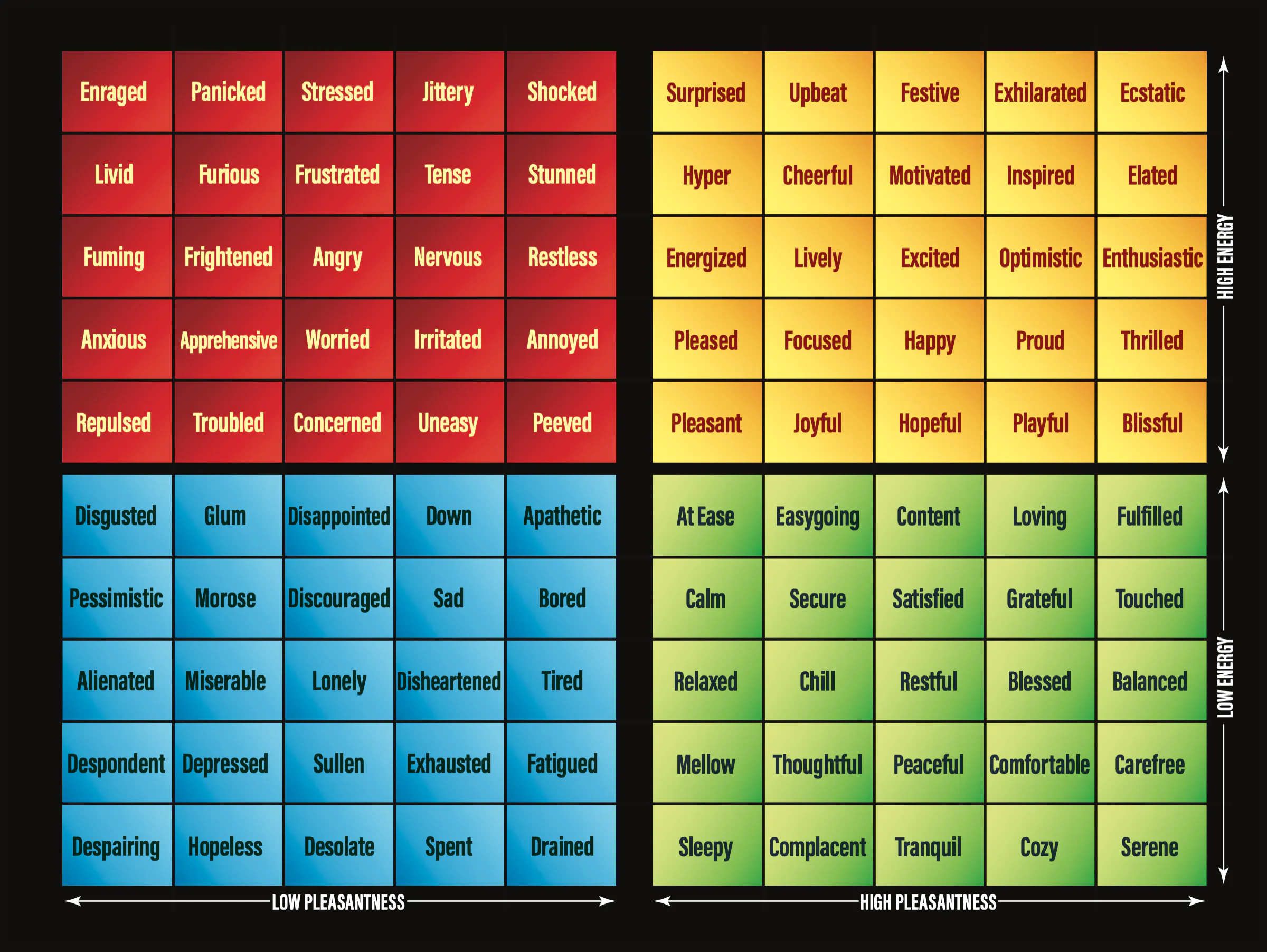
One of our biggest goals in therapy is emotional granularity—the ability to distinguish between "angry," "frustrated," and "betrayed." The app uses a color-coded matrix (the Mood Meter) to help you pinpoint exactly where you are:
- High Energy/Unpleasant (Red): Thinking anxious or furious.
- Low Energy/Unpleasant (Blue): Thinking lonely or burnt out.
- High Energy/Pleasant (Yellow): Thinking inspired or proud.
- Low Energy/Pleasant (Green): Thinking serene or grateful.
2. It tracks the "Why," not just the "What"
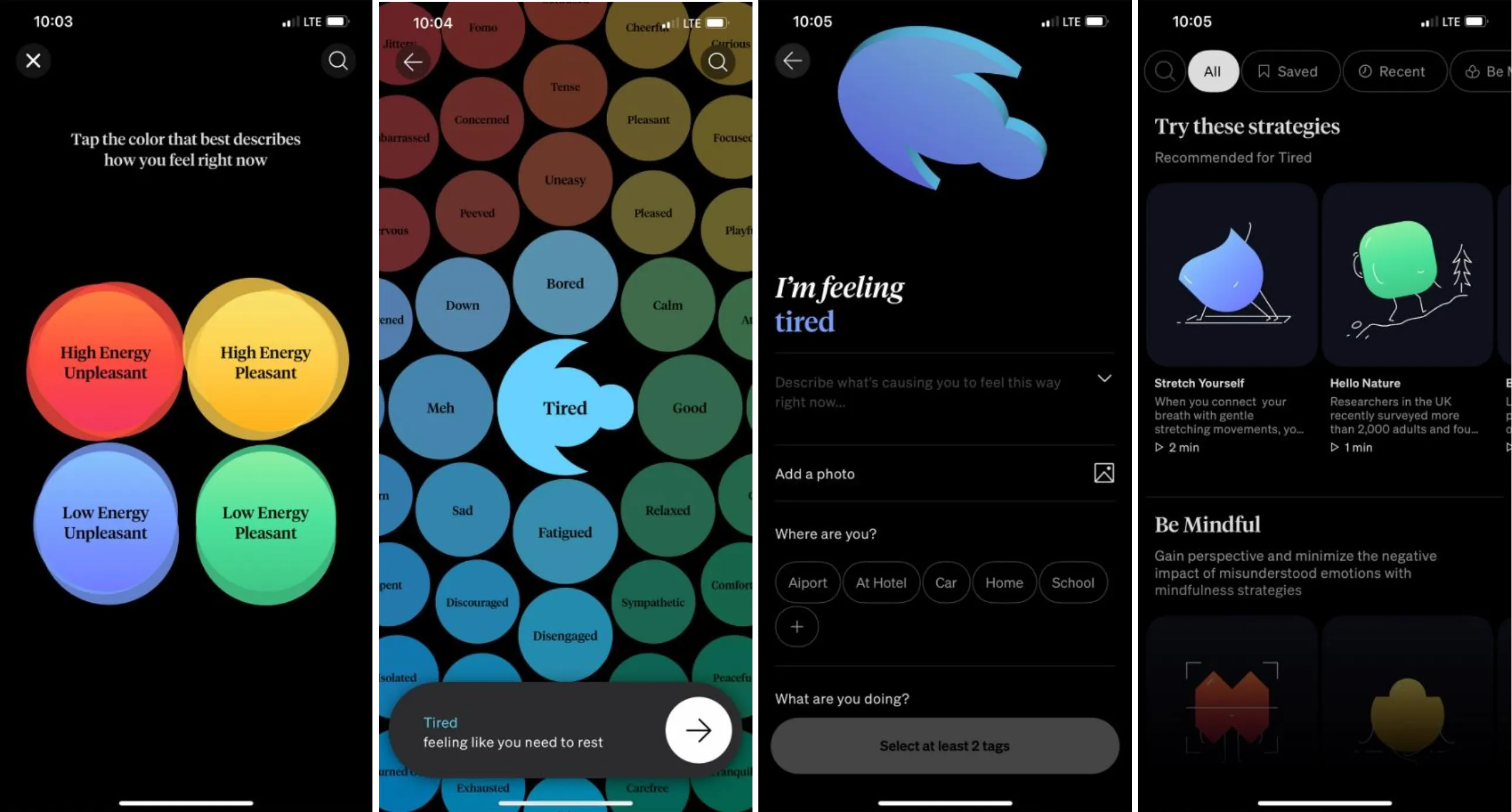
When you log a feeling, the app invites you to note who you’re with, what you’re doing, and even how much sleep you got. Over a few weeks, this creates a "map" of your life. We might discover that your Tuesday afternoon slump isn't just "work stress"—it’s actually a recurring pattern linked to a specific meeting or a lack of midday movement.
3. Real-time regulation
The app doesn’t just leave you sitting with a difficult emotion. It offers 60-second video strategies based on Cognitive Behavioral Therapy (CBT) and mindfulness. If you log that you’re feeling "overwhelmed," it might suggest a quick breathing exercise or a perspective-shifting prompt to help you regulate in the moment.
How to use it as part of your therapy
If you decide to try it, you don't have to do it perfectly. Here’s how we can use it together:
- The "Data Export" for our sessions: You can actually show me your weekly trends. It helps us skip the "I don't remember how last week went" phase and dive straight into the patterns that matter.
- Spotting the "Invisible" wins: Sometimes we focus so much on the hard days that we forget you had three mornings of "contentment" last week. The app helps us celebrate those "Green" and "Yellow" moments.
- The "No-Pressure" check-in: Set a notification for once or twice a day. If you miss it, no big deal. The goal isn't a perfect record; it's building the habit of pausing to acknowledge your internal world.
A Note on Privacy: As a therapist, your privacy is my priority. This app is a non-profit and doesn't sell your data. You are in control of what you share and how much you log.
Next Steps
Curiosity is the best way to start. Poke around. Log some info. Try to leave a voice note in that moment of frustration so we know how you sound, the speed of your words. This can help us process moments that sometimes seem so far away once you reach your weekly session.
You can download the free app in Google Play or the Apple Store.