You said yes to the thing you didn't want to do. Again. Then you spent the evening quietly resenting it, and also feeling guilty for resenting it. Fun times.
If that sounds familiar, you're not bad at boundaries. You're probably very good at reading what other people need, and very used to putting that first. That skill got you somewhere once. It just stopped working for you somewhere along the way.
Why saying no feels so hard
For a lot of people, "no" doesn't feel like a simple answer. It feels like a risk. If I say no, will they be disappointed? Will they be mad? Will they like me less? Your brain treats a small refusal like a threat to the relationship, so it reaches for the safest option it knows: yes.
People-pleasing usually isn't about being nice. It's about keeping things calm, staying needed, and avoiding the awful feeling of someone being upset with you. It makes sense. It's also exhausting.
Signs you might be running on people-pleasing
- You apologize for things that aren't your fault, or for existing in a room.
- You say yes before you've checked whether you actually have the time or energy.
- You rehearse how to say no for days, then don't say it.
- You feel responsible for other people's moods.
- Rest feels like something you have to earn first.
- You're tired in a way sleep doesn't fix.
The guilt is not a stop sign
Here's the part nobody tells you: when you start setting boundaries, you will probably feel guilty. That doesn't mean you did something wrong. It means you did something new.
Guilt is useful when you've actually hurt someone. But a lot of the guilt that shows up around boundaries is just discomfort wearing a guilt costume. You can feel it, notice it, and still keep the boundary. You can be kind and also not available. Both can be true.
A few places to start
- Pause before you answer. "Let me check and get back to you" is a complete sentence, and it buys you time to figure out what you actually want.
- Start small. Practice on low-stakes stuff, like which restaurant or which movie, before the big conversations.
- Skip the essay. A boundary doesn't need a three-paragraph defense. "I can't make it, but I hope it goes great" is enough.
- Notice the resentment. Resentment is often a sign that a boundary is missing somewhere. Treat it like information, not a character flaw.
- Expect some pushback. People who are used to your yes may be surprised by your no. That's an adjustment period, not proof you were wrong.
Want support with this?
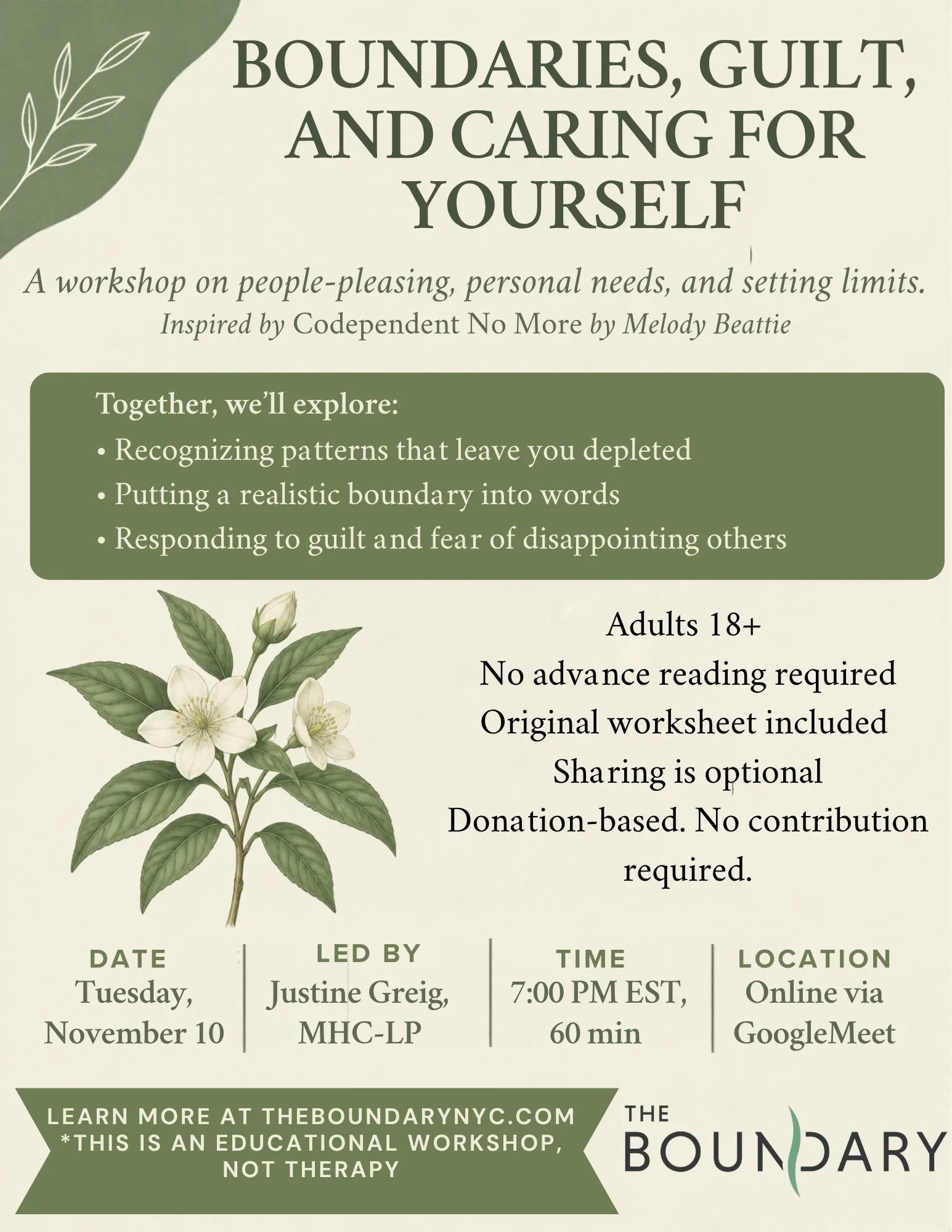
Boundaries are easier to practice with someone in your corner. Our therapists help people work through people-pleasing, guilt, and the fear of letting others down. Book a free consultation to get started.
If you or someone you know is in a crisis, call 911 or contact the Suicide and Crisis Lifeline at 988.