If you've been searching for a DBT group and keep landing on outdated flyers or waitlists that go nowhere, we hear you. DBT Skills Group at The Boundary runs in cohorts throughout the year. We don't keep a permanent open enrollment because the group works better when everyone starts together. But if you want in, we want to know.
Here's everything you need to know about how the group works and how to get on the list for the next cycle.
What is DBT, and who is this group for?
DBT stands for Dialectical Behavior Therapy. It's a skills-based approach originally developed by Dr. Marsha Linehan for people who experience emotions intensely. Over time it's become one of the most researched and effective frameworks for a much wider range of people: anyone who finds that their reactions sometimes feel bigger than the situation, that distress is hard to ride out, that relationships follow frustrating patterns, or that regulating emotions takes a lot of energy.
This group has historically been particularly helpful for people dealing with perfectionism and high-functioning anxiety and depression. You don't need a formal diagnosis to benefit. You just need to want practical tools.
What the group covers
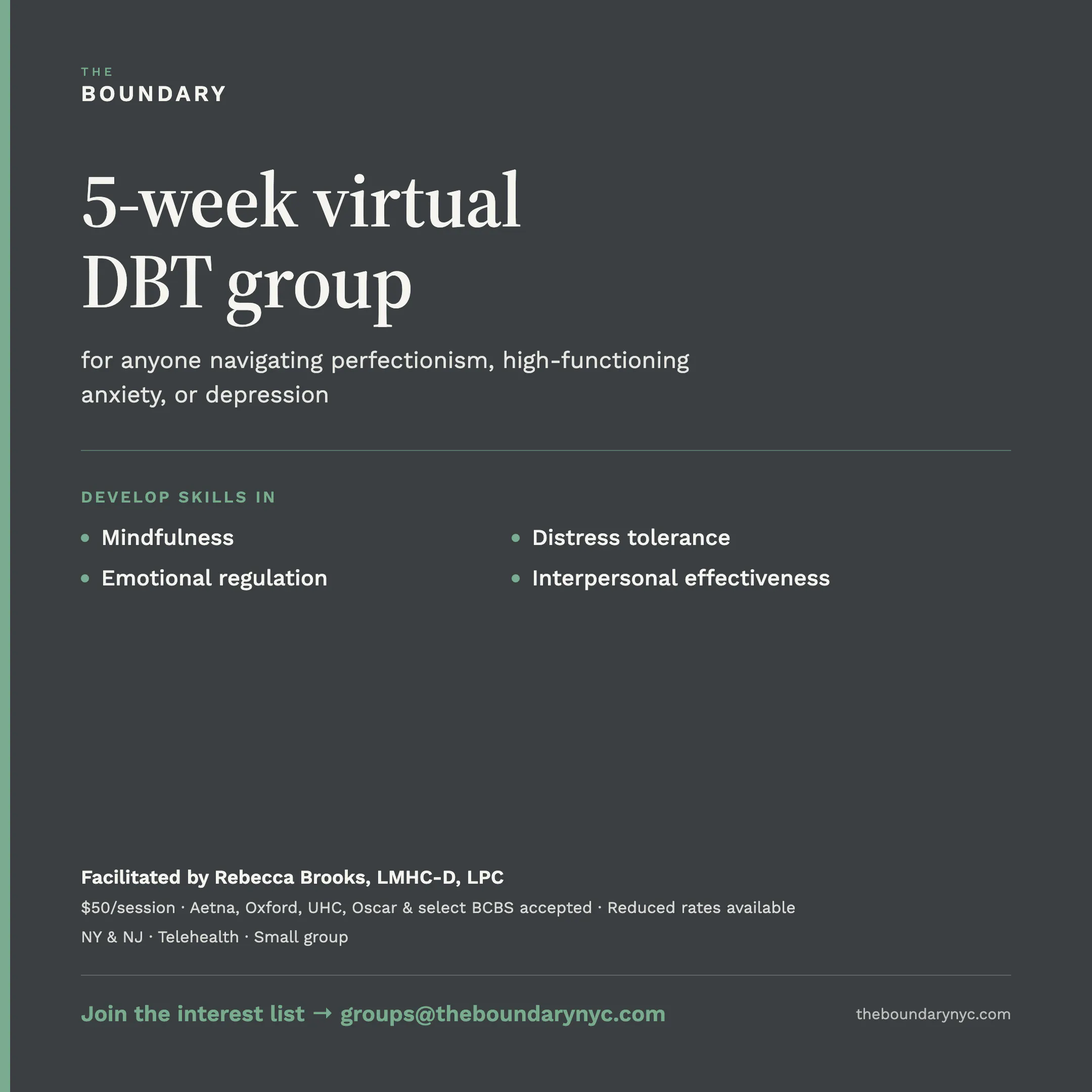
The group works through the four core DBT skill modules:
- Mindfulness: Learning to observe what's happening inside and around you without immediately reacting to it.
- Distress Tolerance: Skills for getting through hard moments without making things worse.
- Emotion Regulation: Understanding where your emotions come from and how to work with them instead of against them.
- Interpersonal Effectiveness: How to ask for what you need, say no, and maintain relationships without losing yourself in the process.
Who leads the group
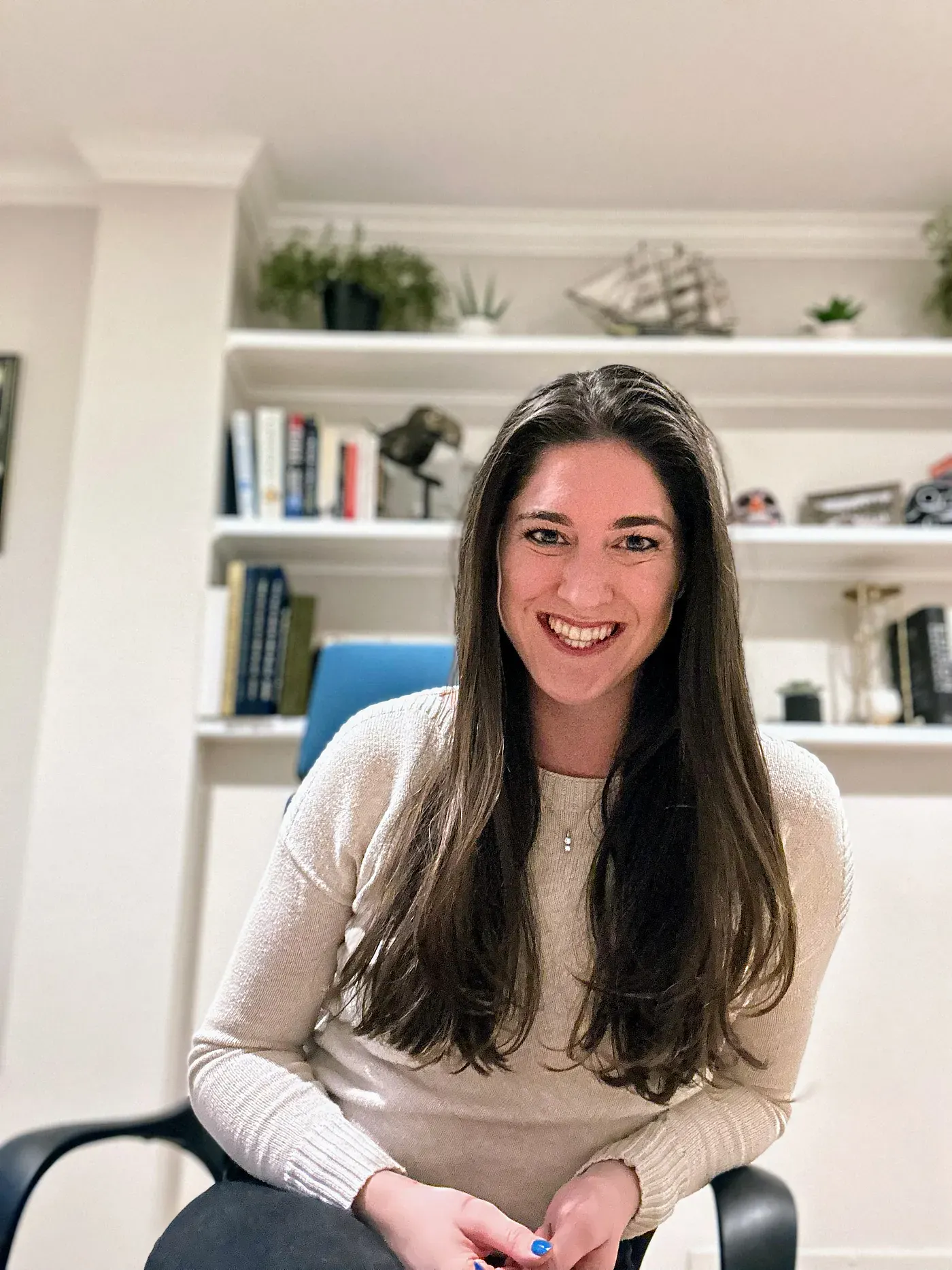
The DBT Skills Group is facilitated by Rebecca Brooks, LMHC-D, LPC. Rebecca is a licensed therapist and clinical supervisor at The Boundary. She brings warmth, structure, and real clinical depth to the group format. She's thought carefully about how people actually learn and change, and it shows.
Format and logistics
- 5 weeks, one session per week (60 minutes each)
- Telehealth via secure video, open to NY and NJ residents
- Small closed cohort — no new members join mid-cycle
- $50 per session
- Accepting Aetna, Oxford, UHC, Oscar, and select BCBS plans
- Reduced rate slots available upon request
- Digital DBT workbook included
When does the next cycle start?
Groups open on a rolling basis throughout the year. The best way to get a spot is to get on the interest list now. When the next cohort opens, we reach out to people on the list first.
To join the interest list, email us at groups@theboundarynyc.com or fill out our group request. We'll be in touch when spots open.
Frequently asked questions
Do I need a DBT diagnosis to join?
No. The group is open to anyone who wants to build coping skills, manage emotions more effectively, or get better at navigating relationships. A formal diagnosis is not required.
Can I be in individual therapy at the same time?
Yes, and we actually encourage it. Group skills work best when you have a place to process and practice them. If you're already working with a therapist at The Boundary, let us know and we can coordinate.
Is this group covered by insurance?
We accept Aetna, Oxford, UHC, Oscar, and select BCBS plans in-network. Reduced rate slots are also available upon request. Reach out to groups@theboundarynyc.com and we can talk through what works for you.
Is this available outside New York City?
Yes. Because the group runs via telehealth, you can join from anywhere in New York or New Jersey.
If you or someone you know is in a crisis, call 911 or contact the Suicide and Crisis Lifeline at 988.